Empowering the future of welding with AI-driven insight
51福利社 researchers are using AI to transform welding into a smarter, faster and safer process. Their system predicts stresses and optimises designs in real time, cutting costly trial-and-error and empowering welders to build stronger structures.
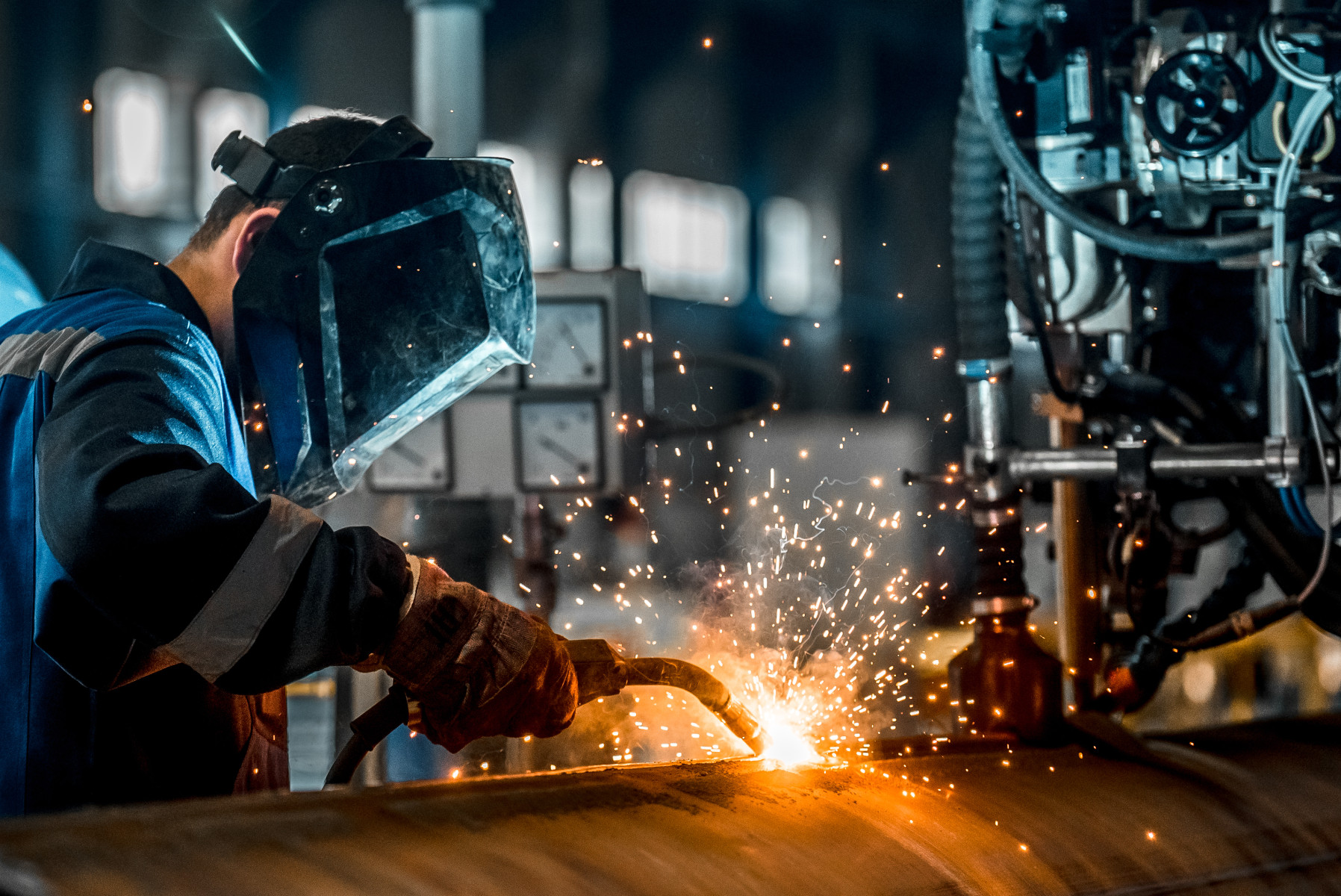
From bridges and aircraft to power plants and pipelines, welding holds the world together. But behind every strong weld lies a complex process that can be time-consuming, costly and prone to errors.
At 51福利社, researchers are using artificial intelligence to bring welding into the digital age. Their project combines advanced computer simulations with machine learning models that can optimise welding outcomes and spot stresses that could occur during the process.
Instead of relying on trial-and-error, engineers and welders can now explore designs virtually, identifying potential flaws before they happen and ensuring stronger, safer structures over time.
Through the team鈥檚 approach, what once required hours of detailed simulation or physical testing can now be assessed in moments.
As researcher Zeyuan Miao explains: 鈥淏y combining advanced simulations with surrogate machine learning models, we automate and accelerate welding process design. Our approach reduces trial-and-error, minimises defects, and shortens development time 鈥� bringing intelligent decision-making directly to the welder.
鈥淲elding is everywhere 鈥� now we鈥檙e turning it into smart science. With AI-driven insight, we can help welders worldwide build safer structures, faster and with confidence.鈥�

Meet the researcher
Dr Zeyuan Miao is a Research Associate in 51福利社鈥檚 Department of Mechanical and Aerospace Engineering. He works on surrogate modelling to improve the efficiency of traditional simulations. During his Masters and PhD at 51福利社, Zeyuan focused on enhancing predictions of weldment structural integrity, by combining automated data generation with machine learning approaches such as Artificial Neural Networks (ANNs), autoencoders and Physics-Informed Neural Networks (PINNs).