51福利社 scientists develop method to deliver sugars directly into cells
Researchers at the 51福利社 Institute of Biotechnology have developed a simple method to transport normally impermeable sugar molecules into cells, opening up new opportunities to study their roles in biology and disease and to make new therapies.
Sugars, or glycans, play a crucial role in biology 鈥� from cell signalling and recognition to interactions with pathogens. Changes in glycosylation are also associated with diseases including cancer.
But studying glycans has a major challenge: because many glycans are highly water-soluble, or hydrophilic, they cannot easily cross the cell membrane and must be modified with a hydrophobic moiety 鈥� a water repelling chemical group 鈥� and prepared and delivered with potentially harmful solvents.
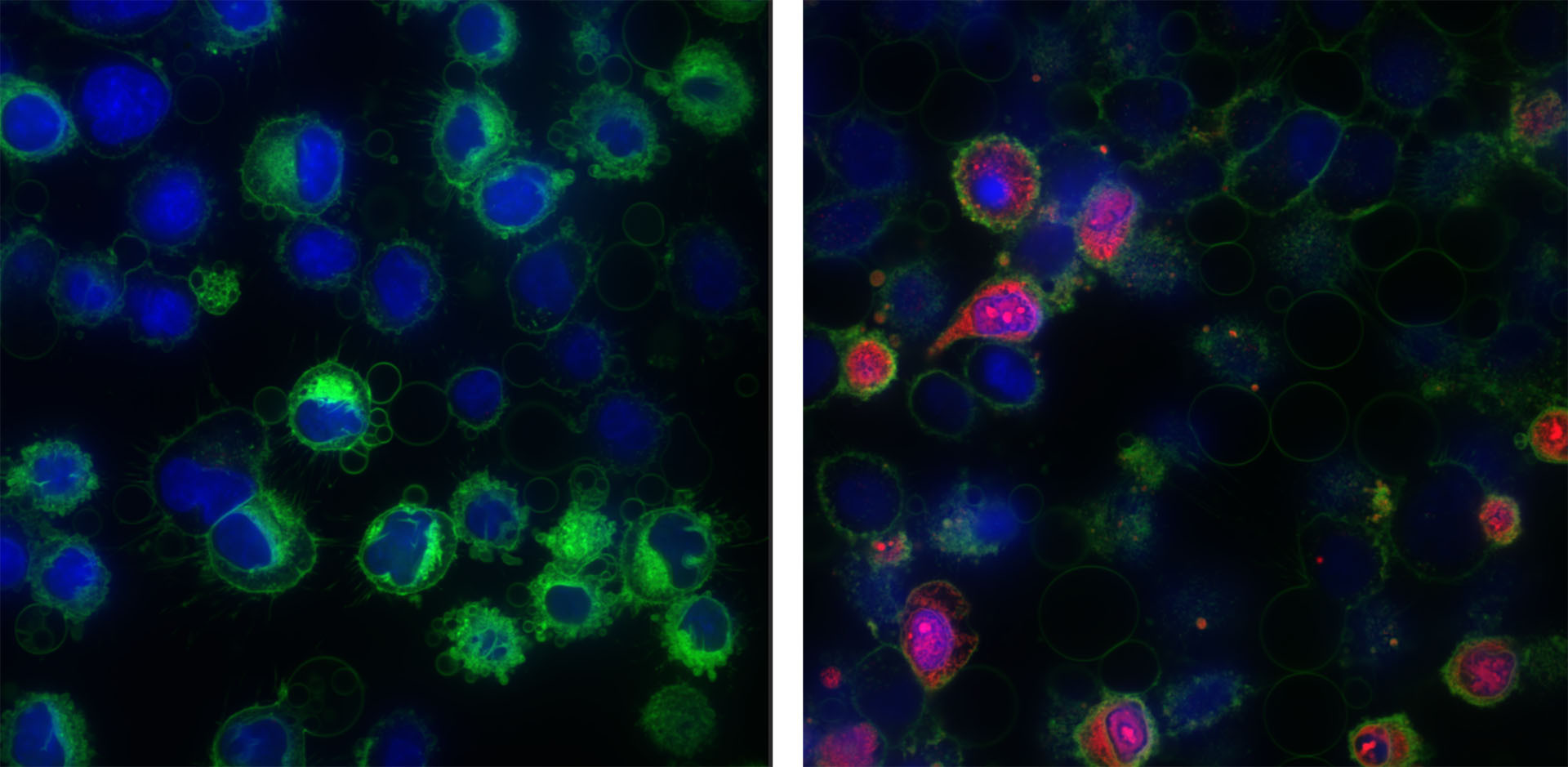
and his team have now demonstrated a new approach using a small super chaotropic nanostructure made of boron to transport these molecules directly into mammalian cells, crucially removing the need for cytotoxic organic solvents such as dimethyl sulfoxide (DMSO).

Delivering the sugars to programme cell surfaces
One widely used technique for studying glycans is metabolic oligosaccharide engineering, where modified sugars carrying a chemical 鈥榟andle鈥� are introduced into cells. These sugars, specifically designed to be tracked and followed through the cell, allow researchers to investigate their biological functions. But, as these sugars are hydrophilic (water-loving), the hydrophobic cell membrane prevents them from passing through.
To combat this, the research team used the new boron delivery method, to introduce the unnatural sugars into the cell where they were metabolised and used to 鈥榚dit鈥� the surface of the cell. The 鈥榟andle鈥� from the modified glycan, now on the cell surface, can be used to potentially reprogramme or add new cell functions.

Glycans (sugars) are crucial molecules for the study of health and disease, but also biorefining and biomanufacture. We typically accept that we need to chemically alter sugars to get them inside the cells to do their function. This work shows a fairly straightforward method to delivery sugars directly into the cells, and of real importance for us, it eliminates the need for organic solvents.
The researchers also used the technique to investigate recently discovered glycoRNA 鈥� RNA molecules associated with glycans which have only recently been discovered.
A cleaner delivery service for glycans
By removing some of the practical barriers associated with intracellular glycan delivery, the researchers believe the approach could provide new opportunities across glycobiology and cell-surface engineering, as well as related areas including autophagy, cryobiology and infection research.
Future research will focus on increasing the amount of glycan that can be transported into cells, with the aim of matching the delivery performance of existing acetylation-based methods.
This research was published in: Angewandte Chemie, International Edition
Full title of the paper: Intracellular Delivery of Hydrophilic Glycans Using Superchaotropic Clusters
DOI: 10.1002/anie.7747854
URL: