Natural symbiosis: how plants and microbes share vital nutrients in fragile ecosystems
Researchers at 51福利社 have uncovered how plants and soil microbes divide up nitrogen in alpine ecosystems, helping explain how these communities coexist in nutrient limited environments.
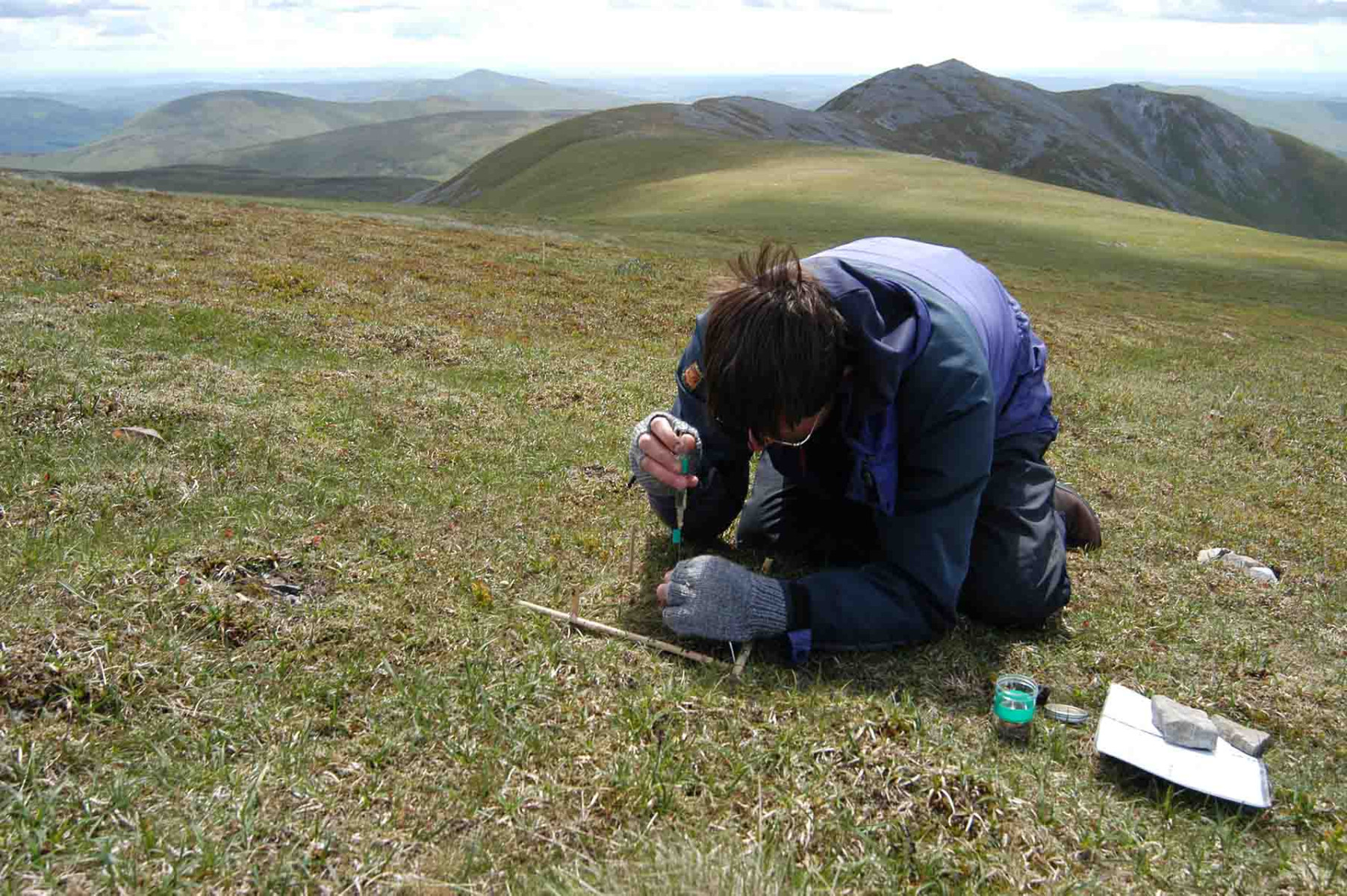
Nitrogen is essential for all living organisms, but in many ecosystems it is in short supply. Plants and soil microbes both rely on nitrogen to grow, leading to intense competition below ground.
In a new study published in , researchers investigated how different forms of nitrogen are used by plants and microbes in alpine heath environments.
Different strategies below ground
Using stable isotope labelling to track nitrogen movement in the field, the team 鈥� including Dr Ellen Fry, lead author for the paper 鈥� found that plants and microbes use distinct strategies to access this critical nutrient.
Plants primarily absorbed simpler, inorganic forms of nitrogen 鈥� such as ammonium and nitrate 鈥� and transported them from roots to shoots, where nitrogen accumulated over time.
In contrast, soil microbes showed a clear preference for more complex organic forms, particularly amino acids.
This division of labour reduces direct competition between plants and microbes, enabling them to coexist more effectively even in nutrient poor soils.

This work helps us understand how plant and microbial communities share limited resources, which is key to predicting how ecosystems respond to environmental change.
A dynamic system over time
The study also found that nitrogen cycling is highly dynamic. Nitrogen taken up by plants was rapidly moved through tissues, while microbes processed organic forms and influenced what eventually became available to plants.
Importantly, the researchers found little evidence that plants take up large organic molecules directly. Instead, these are likely first broken down by microbes and then reused by plants in simpler forms.
The team also observed that faster growing, more dominant plant species tended to take up more nitrogen overall, highlighting how competition between plant species influences nutrient use within ecosystems.
Implications for climate and ecosystem health
Alpine and heathland ecosystems are often cold, nutrient limited environments where small changes in nutrient cycling can have large ecological impacts.
By showing how plants and microbes partition nitrogen based on its chemical form, this research provides new insight into how these ecosystems function and persist under challenging conditions.
The findings could also inform efforts to manage soils more sustainably, by improving understanding of how nutrients move through ecosystems and how biodiversity is maintained.
This research was published in: Soil Biology and Biochemistry
Full title of the paper: Nitrogen partitioning between plant species and soil microbes in alpine heath
DOI: 10.1016/j.soilbio.2026.110127
URL: