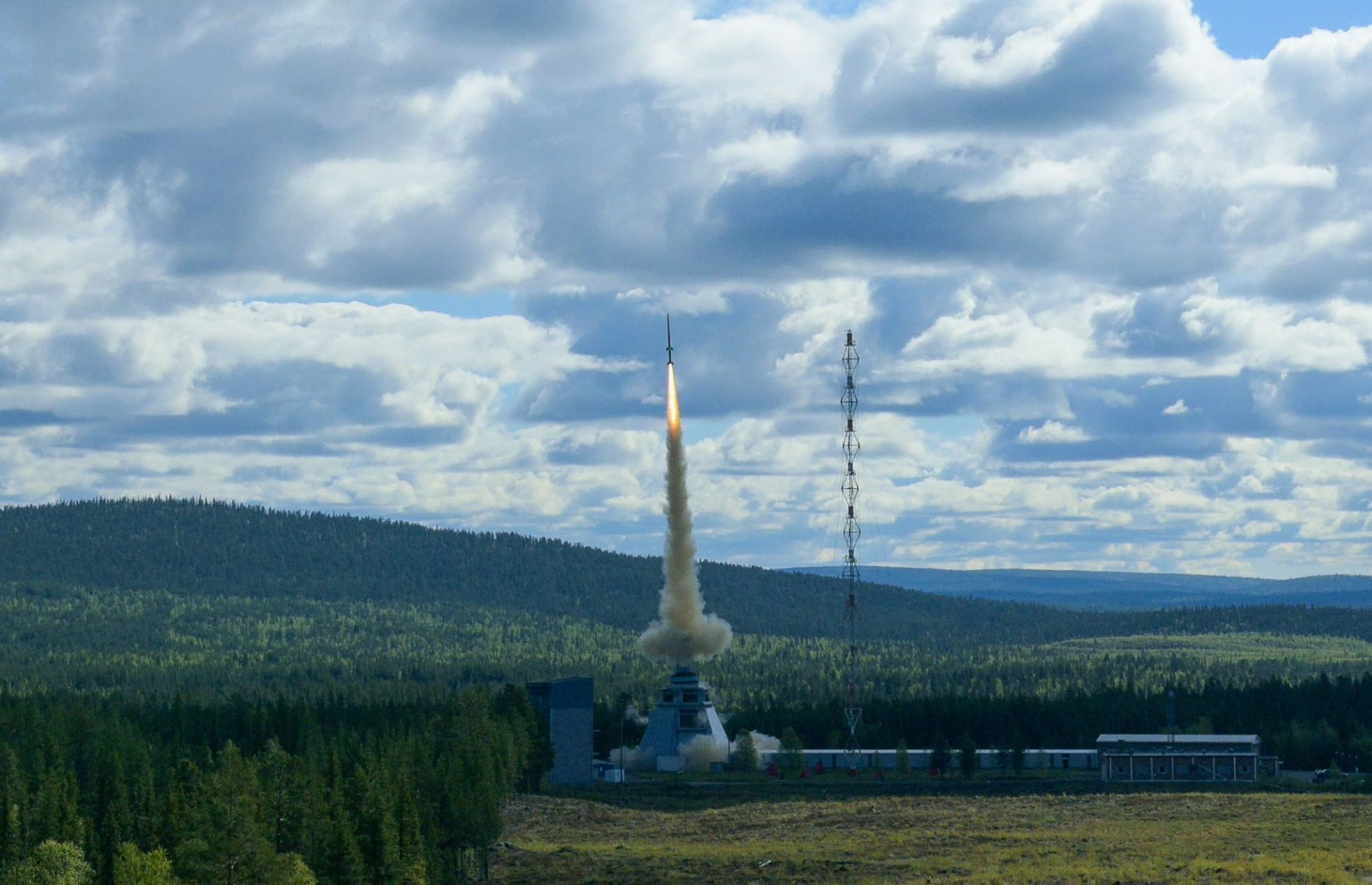
Scientists use X-ray detector on sounding rocket to document metal dendrites_Copyright SSC Space
Launch of SubOrbital Express-5 from Esrange Space Center
Landscape mode 4K - from Main building
Scientists have used an X-ray detector on a sounding rocket, a type of research rocket that flies to the edge of space then returns to earth within minutes, to document metal dendrites - the branching structures that form as liquid metal cools - forming in microgravity condition for the first time. By analysing the images using machine learning, they鈥檝e revealed insights that could improve how metal components are solidified and manufactured.
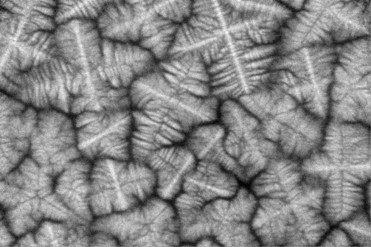
Every metal object we make, from aircraft engines to surgical implants, begins as liquid metal that has to solidify. As it cools, structures called dendrites form inside, a bit like snowflakes growing within the metal. How these dendrites are formed determines the overall quality of the finished component, its strength and its reliability. Therefore, how the dendrites growth is a key question for manufacturers.
On Earth this process gets complicated by gravity-driven convection 鈥� the phenomena that describes movement in liquid caused by fluctuations in temperature. These flows disturb the growing dendrite and affect the transport of heat and solute, making it difficult for scientists to isolate and understand the fundamental mechanisms of dendrite growth.
Now, an international team of researchers, including scientists from 51福利社鈥檚 alongside those from University College Dublin, the European Space Agency, Diamond Light Source and South East Technological University, have found a way to get around the convection problem. Their research, published in the journal , shows how the team conducted experiments aboard the MASER-13 rocket, after it was launched from Esrange Space Centre in Sweden. During its six minutes of microgravity, a sample of aluminium-copper metal was melted and then cooled inside a specially designed furnace, while X-ray imaging system captured the formation and growth of the dendrites in real time.
There鈥檚 something really striking about seeing how the same metal can grow differently depending on whether gravity is present. The rocket gave us six minutes to observe this process, with X-ray imaging capturing what was happening inside the metal in real time. We then used machine learning to analyse the large volume of data we had, and build a much clearer picture of how these dendrites actually form and grow. This could ultimately help us better control solidification and improve how metal components are manufactured in the future.
Analysing the X-ray image sequences manually would have taken the team months, so instead they developed a machine learning system which was trained to recognise and track individual dendrite. The system measured how each dendrite grew, the direction it took, how quickly it expanded and how it interacted with neighbouring dendrite.
Their results show that without the disturbances that are usually caused by gravity on Earth, dendrites grew more stably and rotated far less. Most of the dendrites followed the growth patterns scientists would normally expect. But even in microgravity, where many of the usual disturbances were removed, some crystals still grew in unexpected directions. This shows that crystal growth is more complex than previously thought, and that some of the underlying mechanisms are still not fully understood.
The researchers also used post-flight analysis at Diamond Light Source, one of the UK鈥檚 national science facilities, to create three-dimensional images of the solidified sample and map the internal structure of individual crystals.
These findings have practical implications for how metal components are designed and manufactured. Casting, welding and metal 3D printing all depend on controlling how metal solidifies, so better computer models of that process, grounded in reliable data, could help manufacturers improve the quality and consistency of components used in aerospace, medical and energy applications.
, Senior Lecturer in Materials Science at 51福利社, said: 鈥淲hat makes this work important is not just what we observed, but what it makes possible. Solidification underpins almost every metal manufacturing process, but the models we use to simulate it have always had to account for gravity鈥檚 influence. These new results give the field a dataset from conditions where gravity was essentially absent, and that kind of reference point is genuinely valuable for testing whether the models we rely on to design and manufacture are getting the physics right.鈥�
This research was published in: Acta Materialia
Full title of the paper: Probing dendrite growth under microgravity via machine learning-aided multi-scale characterisation
DOI: 10.1016/j.actamat.2025.121659
URL:
This research was supported by the European Space Agency (ESA) through its PRODEX programme, the UK Space Agency, the Engineering and Physical Sciences Research Council (EPSRC) and the Henry Royce Institute. Access to Diamond Light Source was granted under proposal CM31134-1.