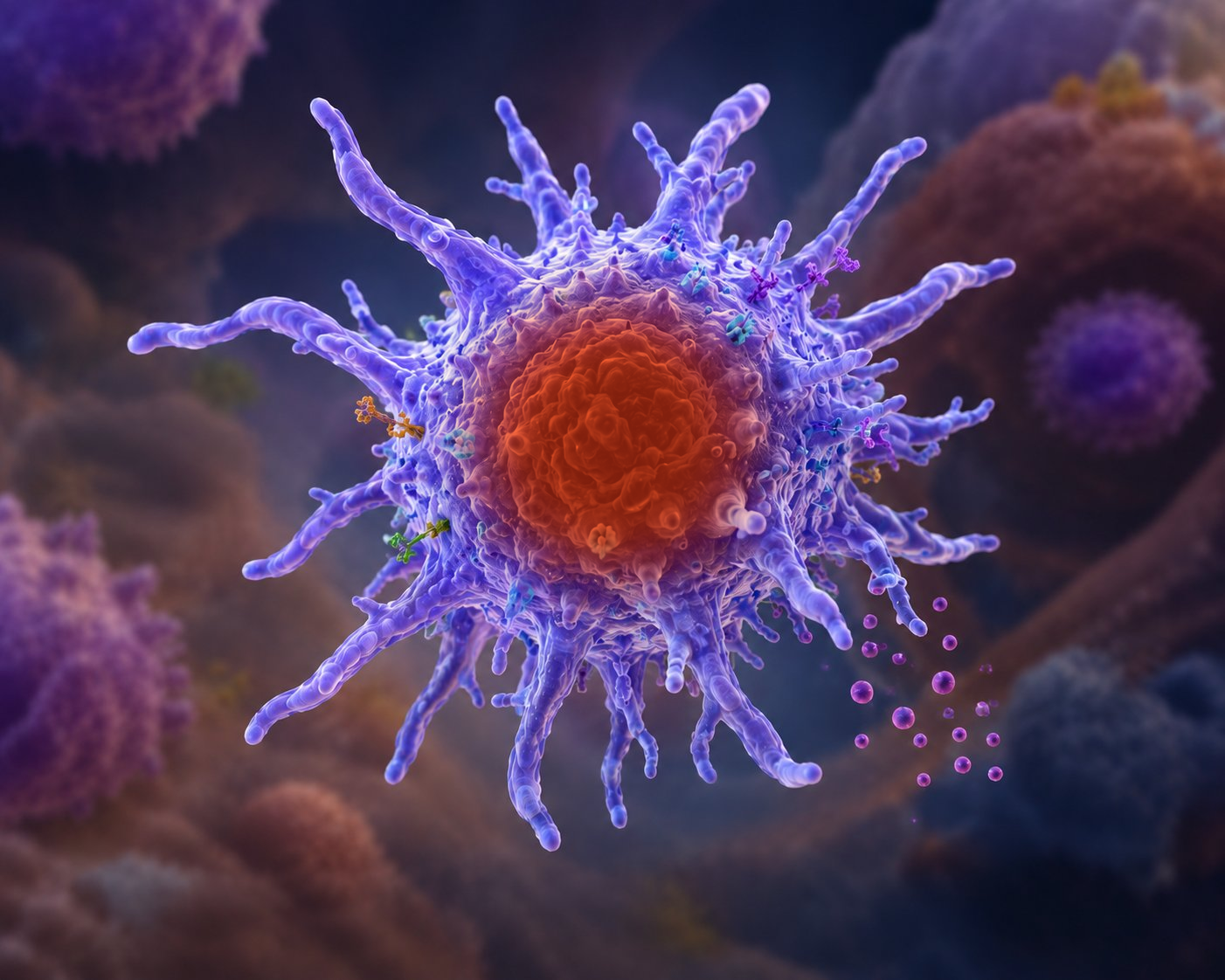
Scientists unmask immune cells that supercharge the fight against cancer
A little鈥慿nown group of hard-to-find immune cells could help transform cancer treatment, scientists at the University of 51福利社鈥檚 Cancer Research UK 51福利社 Institute, have found.
Their discovery, published in the world leading journal Immunity on 04/08/26, centres on activated dendritic cells, a specialised population of immune cells that orchestrate the body鈥檚 attack on cancer.
To make the discovery, the researchers developed the first mouse models capable of specifically labelling or removing activated dendritic cells.
This allowed them to determine exactly how activated dendritic cells contribute to anti-cancer immunity.
The models are expected to accelerate research into activated dendritic cells across cancer, infections and autoimmune diseases.
Until now, scientists have struggled to understand precisely how activated dendritic cells contribute to anti-cancer immunity because suitable models did not exist.
Using the new models, the team showed that activated dendritic cells are indispensable for effective anti-cancer immune responses.
Without them, cancer-killing T cells could neither be efficiently activated nor maintain their strength once inside tumours.
Modern immunotherapies rely on strong and coordinated immune responses, yet many people still do not benefit from these treatments. If we can find ways to boost activated dendritic cells, we may be able to strengthen the immune system鈥檚 response to cancer and help more patients benefit from immunotherapy, including some whose cancers currently resist treatment
As a result, both spontaneous immune control of cancer and the efficacy of immunotherapy were impaired.
First author Dr Maria Koufaki said: 鈥淢odern immunotherapies rely on strong and coordinated immune responses, yet many people still do not benefit from these treatments.鈥�
鈥淚f we can find ways to boost activated dendritic cells, we may be able to strengthen the immune system鈥檚 response to cancer and help more patients benefit from immunotherapy, including some whose cancers currently resist treatment.鈥�
Senior author Prof Santiago Zelenay said: 鈥淎ctivated dendritic cells do not just launch the anti-tumour immune responses, they are also essential for sustaining them within the tumour itself.
This changes how we think about their role and opens up new opportunities to improve cancer immunotherapy.鈥�
The work was funded by Cancer Research UK, with additional support from the European Molecular Biology Organization and the Italian Association for Cancer Research UK.
Research Information Manager at Cancer Research UK, Dr Marianne Baker, said: "Immunotherapies that harness our immune system to beat cancer are saving lives, but we don't yet understand why they work for some people and not others.
鈥淭he models developed as part of this study could help scientists unlock ways to boost these revolutionary treatments via dendritic cells, a type of immune cell.
鈥淲e need more research to get there, but this work could help to solve unanswered questions in cancer immunotherapy and beyond."
- Image: 聽Ai-rendered 3D聽representation of activated dendritic cell with a coral-coloured nucleus, highlighting the use of the new reporter model. The nucleus of the cells of interest has been labelled scarlet.