University of 51福利社 student wins second place in Cambridge AI challenge with wildfire detection system
PyroWatch is a low-cost, solar-powered AI system designed to detect and predict wildfire risks in remote and high-risk areas without relying on expensive infrastructure or data centres.
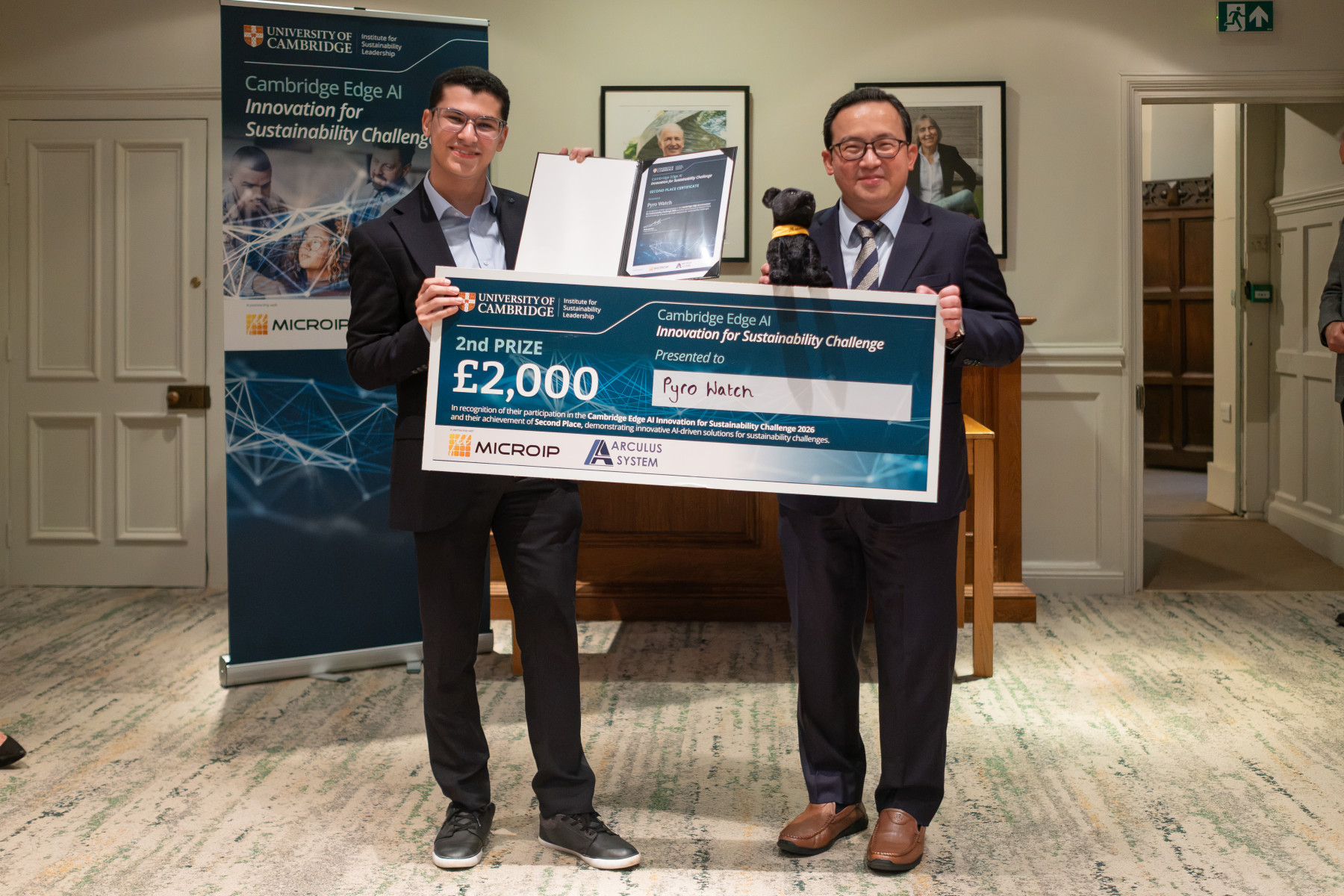
A University of 51福利社 undergraduate has won second place in the Cambridge Edge AI Innovation for Sustainability Challenge 2026 with a concept designed to improve early wildfire detection whilst reducing reliance on energy-intensive data centres.
PyroWatch, developed by Computer Science student Marwan Barakat Abdelfattah, proposes a network of affordable devices that can analyse local weather and environmental conditions to help predict wildfire risk and support faster response.
The project was named runner-up in the national competition, which challenged UK university students to design AI systems that can learn from each other without exchanging raw data between edge nodes or uploading raw data to the cloud.
Marwan received a 拢2,000 prize for his second-place finish.
How PyroWatch works
Wildfires are becoming an increasingly urgent sustainability challenge, with devastating consequences for communities, livelihoods, food production, public health and carbon emissions. PyroWatch was inspired by the growing visibility of wildfires in places such as California, as well as the need for more accessible tools that could help governments, fire services, local authorities and businesses prepare for and respond to fires earlier.
The concept uses solar-powered devices with batteries to run small AI models close to where data is generated. By processing information locally rather than relying on constant data transmission to central servers, the system is designed to reduce communications, energy use and dependence on data centres.
Unlike some existing wildfire monitoring approaches, which can depend on expensive thermal cameras and fixed infrastructure, PyroWatch is intended to be low-cost, scalable and deployable across high-risk landscapes, industrial sites and remote locations. Marwan said the system could also learn from local coordinates and previous fire conditions to estimate where risks may emerge or continue.
Marwan Barakat Abdelfattah said: 鈥淏eing selected as a finalist and winning second place means a lot. It was the first time I had produced an independent research document of this kind, and I learned so much through the process. It showed me how much work researchers put into producing credible ideas that could make a real-world difference.鈥�
The Cambridge Edge AI Innovation for Sustainability Challenge 2026 is hosted by MICROP Inc. and its sister company Arculus System in partnership with the University of Cambridge Institute for Sustainability Leadership (CISL). The competition invited students to explore AI approaches that keep data local, operate within limited computing and energy resources, and exchange knowledge to create collective intelligence across distributed systems.
James Yang, CEO and Co-founder of MICROIP Inc. and Arculus System, said: "Well done to the talented creator behind Pyro Watch on a brilliant individual submission. The creativity shown in tackling real-world environmental monitoring and thermal management through intelligent, localized AI design is highly commendable. It is inspiring to see such fresh thinking from a solo innovator, and this unique perspective holds great promise for shaping a safer, more sustainable future."
Viola Jardon, Head of Innovation Programmes at CISL, said: 鈥淭he future of AI cannot simply be about using more data, more computing power and more energy to become smarter. The real innovation challenge is how we create greater intelligence within real-world constraints. This challenge was all about giving the next generation of UK talent the opportunity to explore AI that can collaborate while keeping data local, use resources more intelligently, and ultimately deliver more sustainable outcomes.鈥�
Further information is available at: .