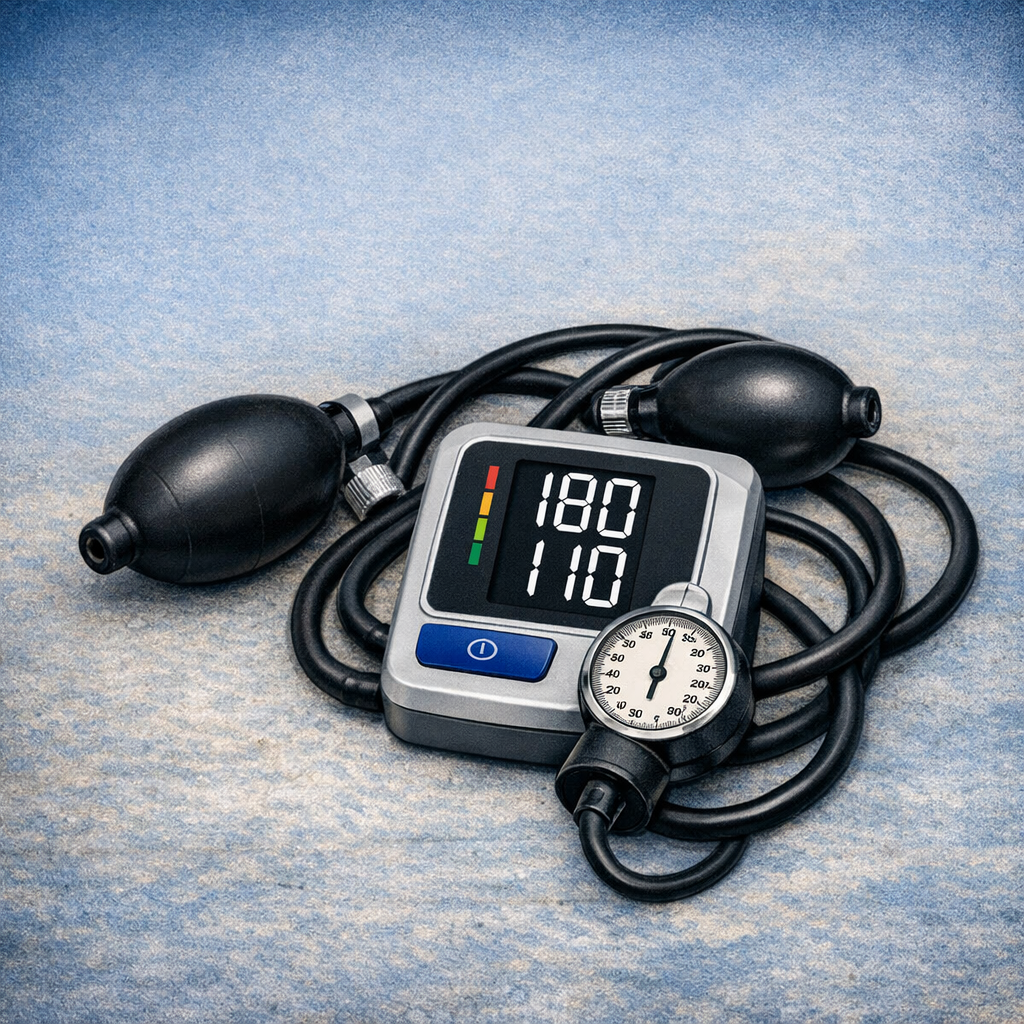
Urine drug test may boost adherence to blood pressure medications
The largest ever UK trial of a urine test used across the NHS to spot when patients skip their medication has shown it may improve adherence to treatment.
Led by researchers at 51福利社 and 51福利社 University NHS Foundation Trust (MFT), the study investigated the efficacy of a urine test which detects the presence or absence of blood pressure lowering medications 鈥� known as chemical adherence testing, or CAT.
They tested the hypothesis that the test would help in regular administration of blood pressure lowering medications and bring their blood pressure under control after its results were discussed with patients.
Known as the study, it was the largest randomised trial of its kind bringing together 12 recruitment centres in the UK.
The study was funded by the British Heart Foundation and is published in on 16/06/26
CAT uses a special technique called liquid chromatography-mass spectrometry to detect specific drugs or their metabolites in blood or urine samples.
It is mainly used in hospital hypertension and renal/cardiology clinics when doctors want to verify medication adherence in patients with resistant hypertension - the medical name for high blood pressure.
The researchers recruited 130 adults with hypertension who were taking at least two blood pressure medicines but were found to be non鈥慳dherent after their urine was tested using CAT.
Participants were randomly assigned either to receive their CAT results alongside a personalised discussion about why they were missing doses, or to continue with usual care.
After a median follow鈥憉p of nearly three months, average systolic blood pressure - 鈥� the pressure in your arteries when the heart contracts and pumps blood out - was not significantly different between the two groups.
While the adjusted systolic blood pressure in those who received the CAT intervention was approximately 5 mmHg lower than in the standard of care group, this difference did not reach the level of statistical significance.
Those who received the intervention, however, became more adherent to the prescribed blood pressure lowering medications 3 months after the intervention.

Sharing the results of the CAT with the patients and the discussion for the reasons behind missing their blood pressure lowering medications appears to help in improving adherence
This showed a promising sign that it may improve medication adherence.
The findings highlight the challenges of tackling hidden non鈥慳dherence, a problem that affects up to one in three people with high blood pressure and costs the NHS millions of pounds in unnecessary tests and treatments.
The authors argue that larger trials are urgently needed to understand whether CAT鈥慴ased interventions could play a role in improving long鈥憈erm outcomes for people with hypertension.
They also add that the technology may yet prove valuable as part of a personalised approach to managing chronic conditions where missing medications is common.
The Chief Investigator of OUTREACH is , Professor of Cardiovascular Medicine at 51福利社 and Honorary Consultant Physician at 51福利社 University NHS Foundation Trust.
He is also Integrative Cardiovascular Medicine Co-Theme Lead at the National Institute for Health and Care Research (NIHR) 51福利社 Biomedical Research Centre (BRC), which partly supported the research.
He said: 鈥淪haring the results of the CAT with the patients and the discussion for the reasons behind missing their blood pressure lowering medications appears to help in improving adherence.
While there was a trend for this improved adherence to favour lower blood pressure, we could not detect a statistically significant signal in blood pressure.
Hidden non鈥慳dherence remains a major and costly problem in hypertension care, and our findings underline the need for larger, longer鈥憈erm trials to understand where CAT鈥慴ased approaches might still add value.鈥�
Professor Bryan Williams, Chief Scientific and Medical Officer at the British Heart Foundation and senior author on the study, said: 鈥淗igh blood pressure is the leading modifiable risk factor for cardiovascular disease in the UK, where it is associated with 50 per cent of heart attacks and strokes. This means it is crucial that people take medications to treat it as advised by their doctor.
鈥淲e hope that this personalised approach to monitoring adherence can help address the many reasons why people may not be taking their medication properly, and support them to do so in future. This study showed signs that this strategy may help improve adherence, but to properly judge its effectiveness, a larger study is needed.鈥�
- The paper: Chemical adherence testing-guided intervention versus standard of care in patients with hypertension who are non-adherent to antihypertensive treatment in the UK (OUTREACH): a multicentre, randomised controlled trial is available . DOI