MIB researcher secures major fellowship to uncover the hidden weapons of microbial warfare
Dr Will Smith has won a University Research Fellowship to study how bacteria use multiple weapons against rivals – work that could reveal new ways to tackle antimicrobial resistance and develop more resilient biocontrol technologies.
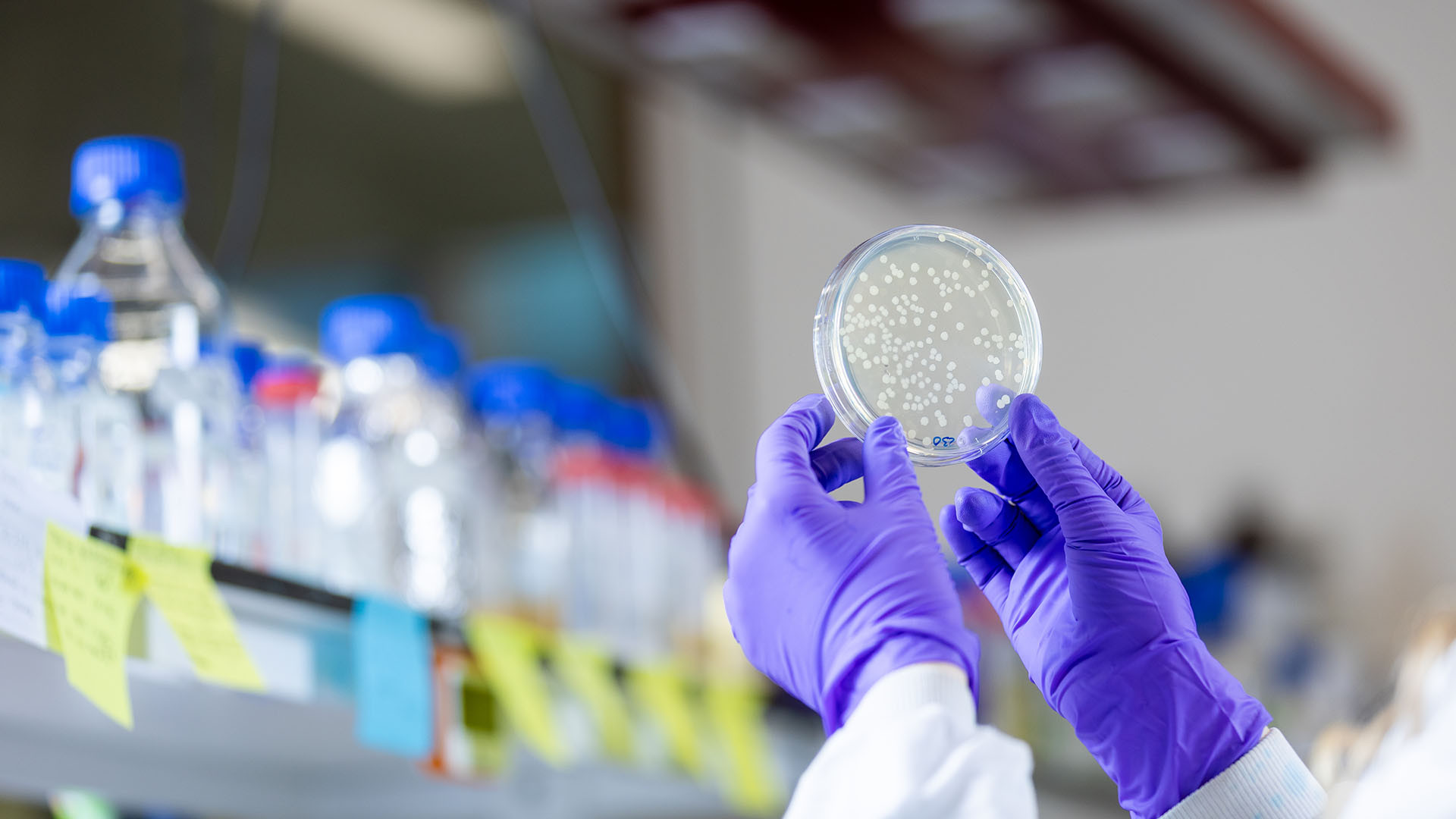
From poison-tipped spearguns to virus-like assassins and molecular machines that punch holes in rival cells, microbes wage war using an extraordinary arsenal of biological weapons. Now, a 51¸£ÀûÉç Institute of Biotechnology researcher has secured prestigious funding to discover why bacteria carry so many different weapons – and how this knowledge could help tackle one of the biggest threats to global health: antimicrobial resistance.
Fighting antimicrobial resistance
has been awarded a University Research Fellowship to investigate how microbes deploy and evolve multiple weapons during competition with one another. His project, the evolution of multi-weapon fighting in microbes, will combine computational modelling, laboratory experiments and large-scale genomic analysis to reveal the rules governing microbial conflict.
Although antibiotics have transformed modern medicine, they represent just one example of the sophisticated weaponry that microbes use against their rivals. Bacteria can inject toxins directly into neighbouring cells using microscopic harpoons, fire toxic protein weapons, or deploy virus-derived nanomachines capable of destroying competitors from a distance.
Scientists have made major advances in understanding how many of these weapons work at the molecular level. However, a fundamental mystery remains: why do bacteria invest in multiple weapons rather than relying on just one? Will’s research aims to answer that question.
Choosing the most effective defence
Using Pseudomonas bacteria – a medically important group known for its diverse arsenal – he will investigate when different weapons are most effective, how they interact with one another, and whether carrying several weapons helps microbes adapt to changing environments and opponents. The project will also explore how rival bacteria evolve resistance, and whether combinations of weapons can make it harder for resistance to emerge.
The findings could have implications far beyond understanding microbial ecology. By uncovering the evolutionary logic behind bacterial weapon systems, the work could inform the development of new antimicrobial approaches and more resilient biocontrol technologies.

Microbes deploy many amazing chemical and biological weapons to wrest resources from rival cells. Alexander Fleming's discovery of one such weapon – penicillin – developed into one of the most important technologies of the 20th century, adding around 20 years to the average human lifespan. But antibiotics are just the tip of the iceberg. There are many more antimicrobials – including weaponised viruses, poison spearguns and hole-punching nanomachines – in the microbial arsenal. My dream is to use this knowledge to develop robust alternatives to current antibiotics and biocontrol agents, using microbes' own weapons against them.
The fellowship will support an ambitious five-year programme of research examining how bacterial arsenals evolve, how different weapons perform under different environmental conditions, and which combinations are most resistant to evolutionary counter-attacks. The project will draw on expertise in evolutionary biology, microbiology, genomics and mathematical modelling to build a comprehensive picture of how microbial conflicts shape the communities that surround us. Will says of the award “I'm absolutely thrilled to receive this award, and I couldn't have done it without the amazing support 51¸£ÀûÉç has given me during my Sir Henry Wellcome Fellowship."
Ultimately, Will hopes the research will help scientists predict competitive interactions within microbial communities and develop new ways of harnessing beneficial microbes for applications in health, biotechnology and agriculture. His long-term vision is to understand how microbial weapons and defences co-evolve, opening the door to new generations of antimicrobials designed to remain effective for longer in the face of resistance.